
By Mary Hollen
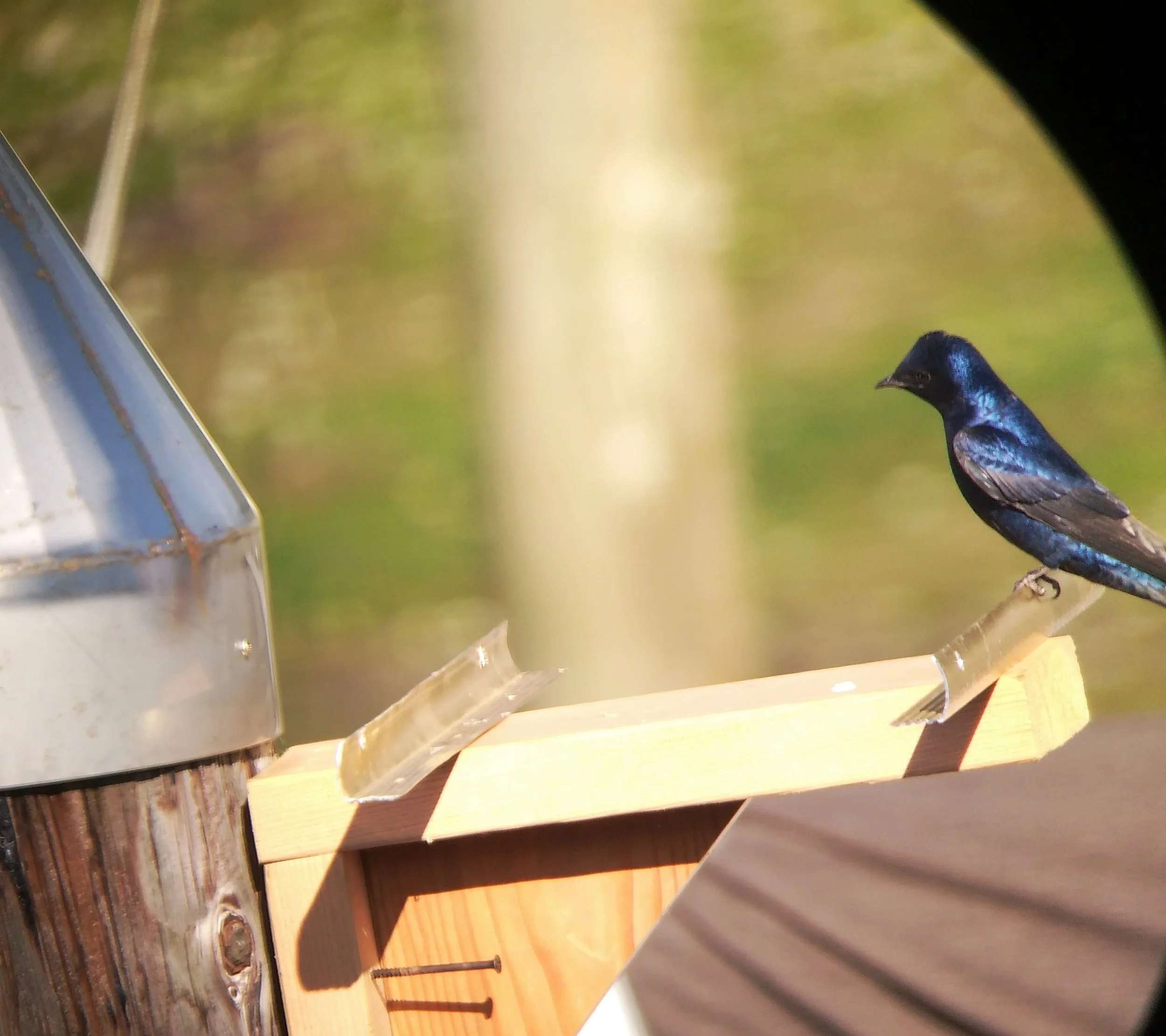
Male Purple Martin scouting a nesting site.
The Western Purple Martin season started off with January news of Washington State Department of Fish & Wildlife and Stan Kostka of Arlington (former Secretary of the international Western Purple Martin Working Group) together forming a new Washington Western Purple Martin Working Group to compile nesting data. Close to home, Linda Rhodes volunteered to take over monitoring of the nest boxes at the old pilings on Crockett Lake.
A year ago, I lost the front of one of my nest boxes which then stayed empty all last season. Over the winter Paul Kukuk volunteered to build a new front for it and a similar box. His intent was that they should be easier to secure after nest checks — and they were.
Western Purple Martins announced their April 18 arrival in Lagoon Point this year with lovely songs from atop local sailboat masts. Us landlords held off putting up our boxes for a week or so in the hopes that house sparrows wouldn’t start nests in them before the martins moved in, fighting off the martins. We were only partially successful. Martins don’t begin nest building until a month after they arrive from South America. They spend the month inspecting nest boxes, singing and restoring their strength from the long migration.
Vernon Brisley put a stop to the starlings nesting in my mailbox nest box by crafting a beautiful new starling-resistant entrance. The day after it was put in place, a pair of adult martins took the box and never left it until successfully fledging young several weeks later. Even then they came back to rest in it before migrating south. Now I have five boxes that adult starlings can’t get into but martins can.
The Birding in Neighborhoods South (BINS) group made their annual late-July visit to Lagoon Point and enjoyed two hours of watching martins at my place and the neighboring East Canal lots plus in Sheri Croll’s two nest boxes on the West Canal. The expert birders spotted feeding activity at neighboring lots (Bob Vierra’s nest box and piling cavity) that I had not noticed, indicating martin nesting. I overheard some (human) networking that will hopefully result in more martin nesting habitat on Whidbey Island! Sharing Purple Martins with Cathi Bower and the BIN South group is always a highlight of the season.
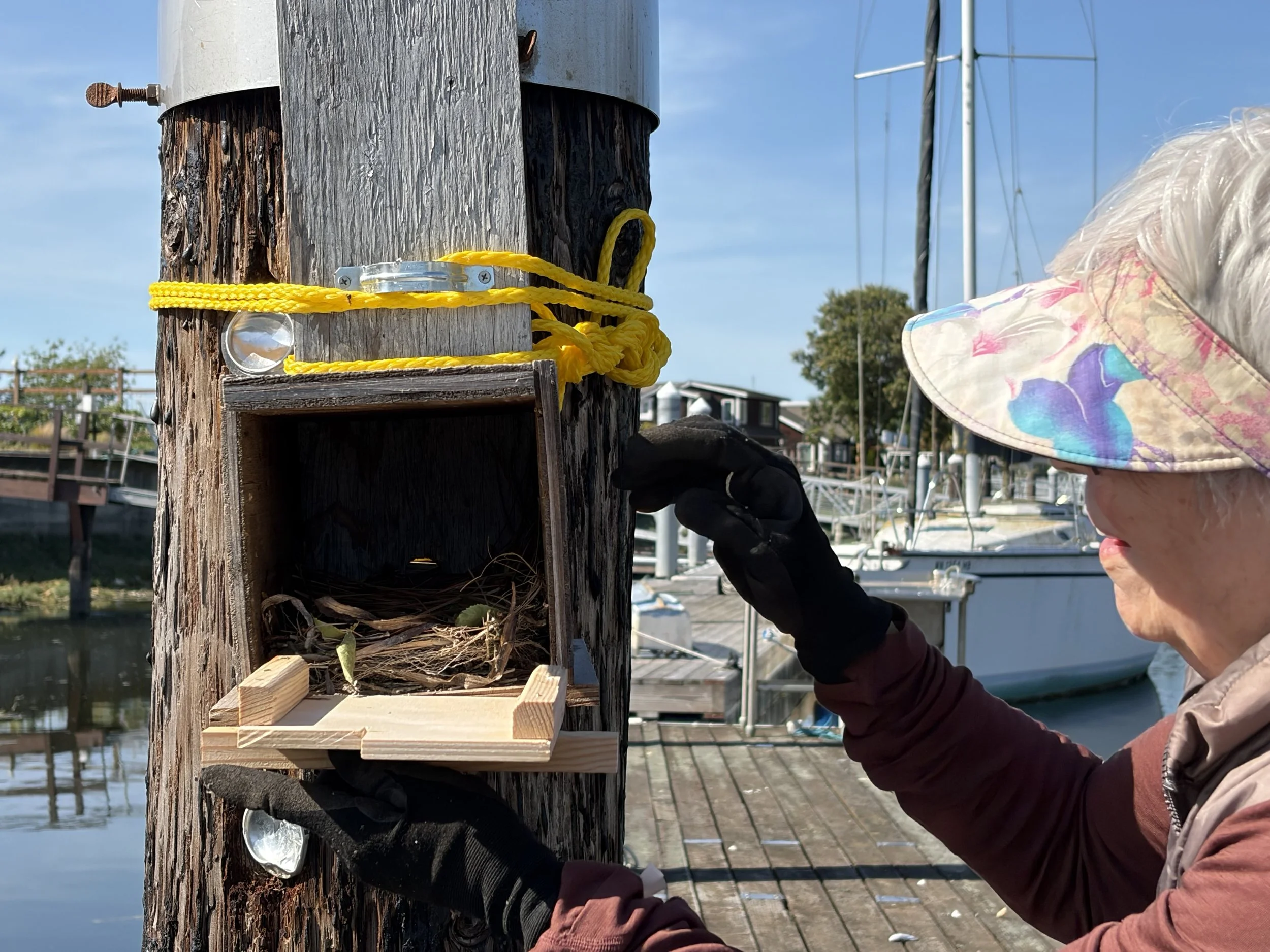
Mary Hollen checking a martin nest box.
Linda Rhodes and Vernon Brisley reported two active nests from their regular surveys at the Crockett Lake pilings. They were able to note Purple Martins successfully outcompeting tree swallows for a nest box. Gary Hammer’s condo boxes at Callen’s Restaurant held six nesting pairs.
Stan Kostka and Lynn Schmidt observed 22 nesting pairs at English Boom on Camano Island over the season and two pairs at Iverson Spit. They also observed martins nesting in the old pilings north of Possession Point Waterfront Park and 11 pairs at Cornet Bay.
Other interesting Whidbey Island observations included a nesting pair at some gourds in a private location on Dines Point. Mark Borden reported a nesting pair in a bumper hole at the Coupeville Ferry dock at Keystone, but no martins in his former kestrel nest boxes. Kestrels nested in them instead.
I ended up with three successful nests that fledged. Another delightful year.