Monthly Programs
Next General Meeting Program: Saturday, November 14, 2026 in person at the Unitarian Universalist Congregation of Whidbey Island.
Our monthly programs feature a guest speaker presenting a subject of interest to those who love birds. We have nine programs a year, with no program in July, August and December, on the second Thursday of the month, and they are free and open to the public. Drop by and enjoy the company as we all learn something new from our featured guest. See our Calendar or Events List for upcoming programs.
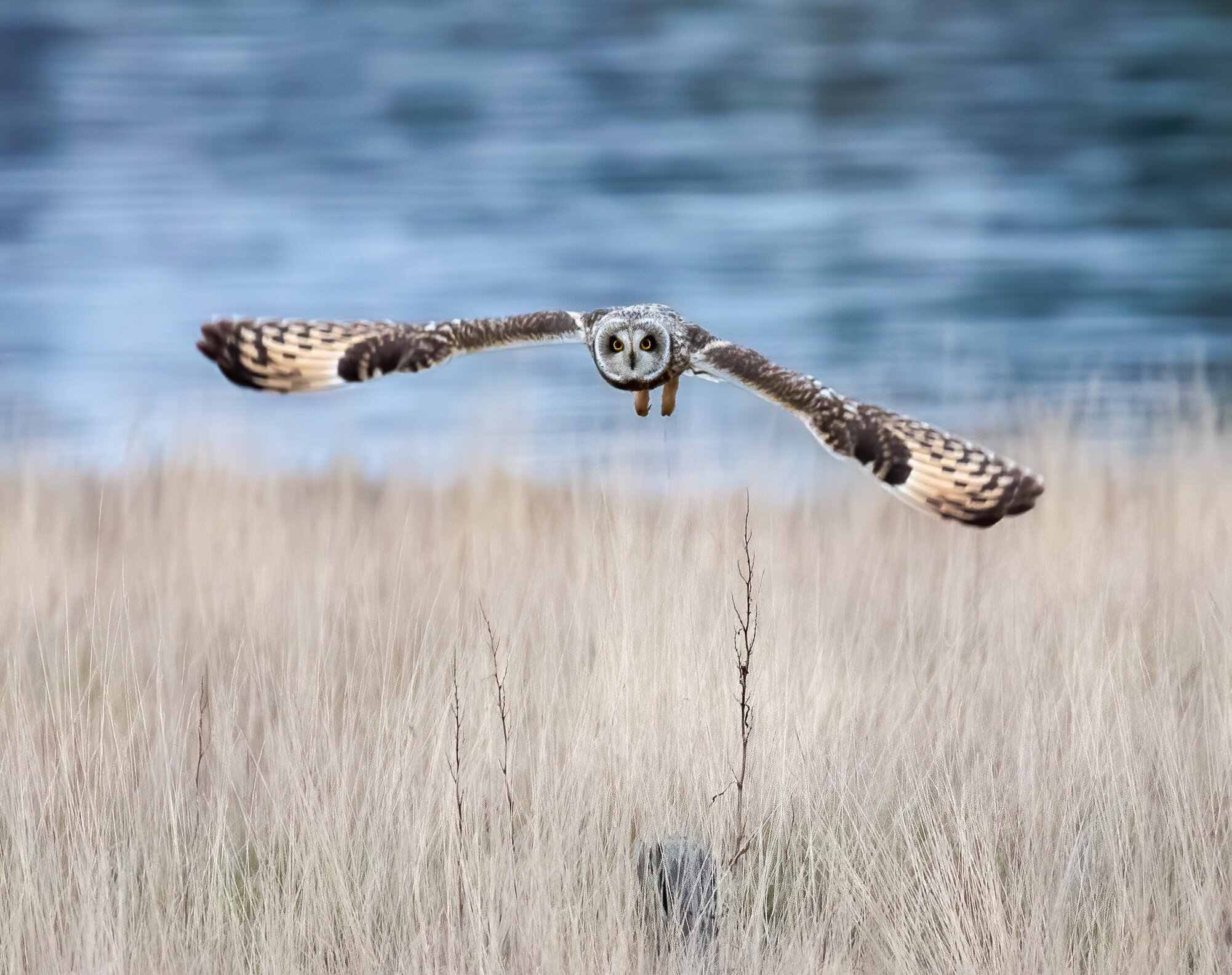
Banner photo by Jann Ledbetter
How to Count 4 Million Birds: Veracruz and its River of Raptors
with Steve Dougill
4:30 PM, Saturday, November 14th, 2026
via Zoom and in-person at the Unitarian Universalist Congregation of Whidbey Island,
20103 WA-525, Freeland
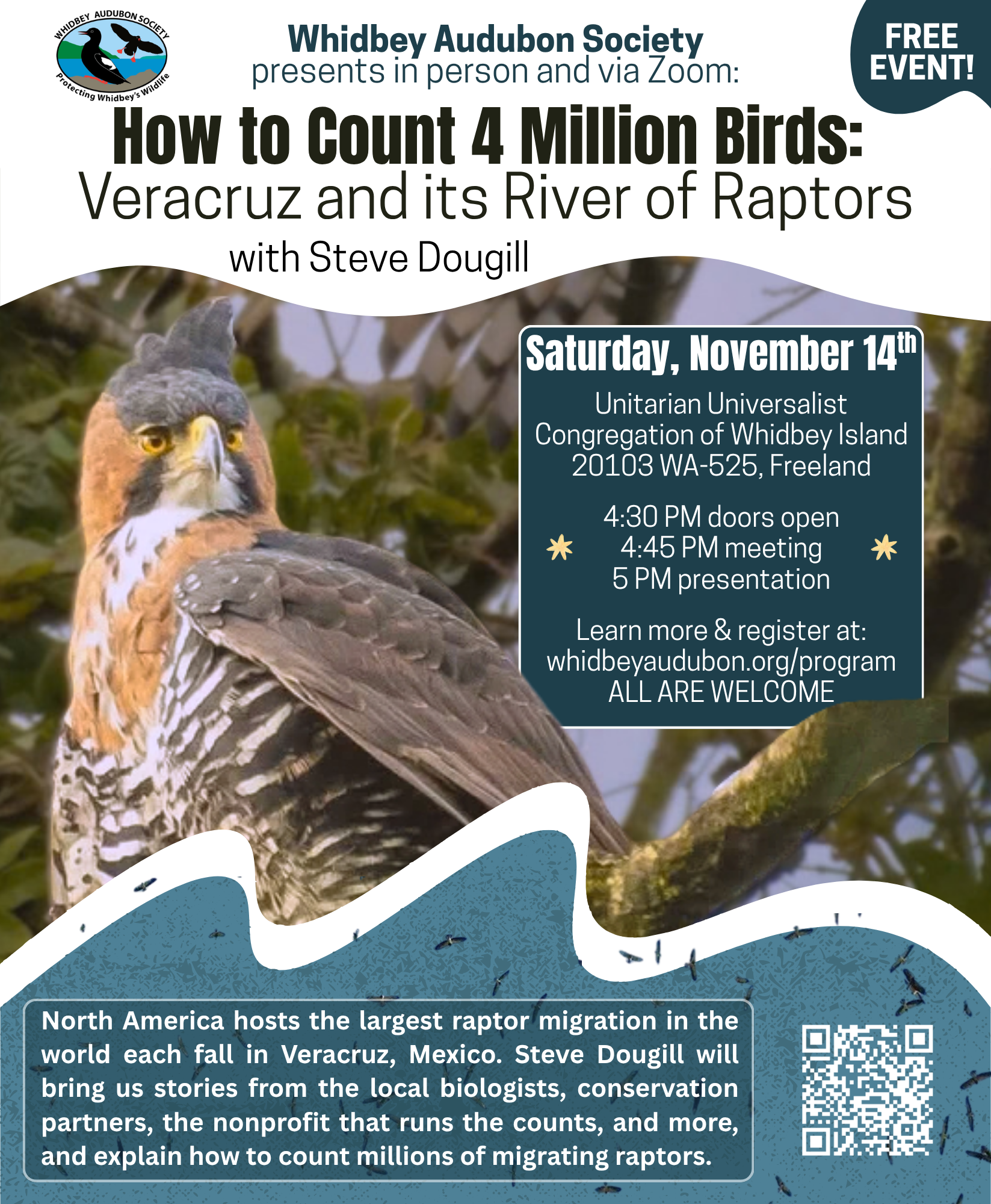
North America hosts the largest raptor migration in the world each fall in Veracruz, Mexico. But it’s a lot more than just the birds of prey; there’s millions of migrating songbirds and storks and pelicans and anhinga… and clouds of dragonflies and colorful butterflies. It’s also a compelling story of the biologists who grew up in the small rural communities, and the non-profit that runs the counts, the education programs, forges conservation partnerships with local land owners, and hosts several MOTUS towers. Steve worked there for a season and so will bring you the story and explain how to count millions of migrating raptors.
This meeting will be held both on Zoom (link emailed upon registration) and in person at the Unitarian Universalist Congregation of Whidbey Island.
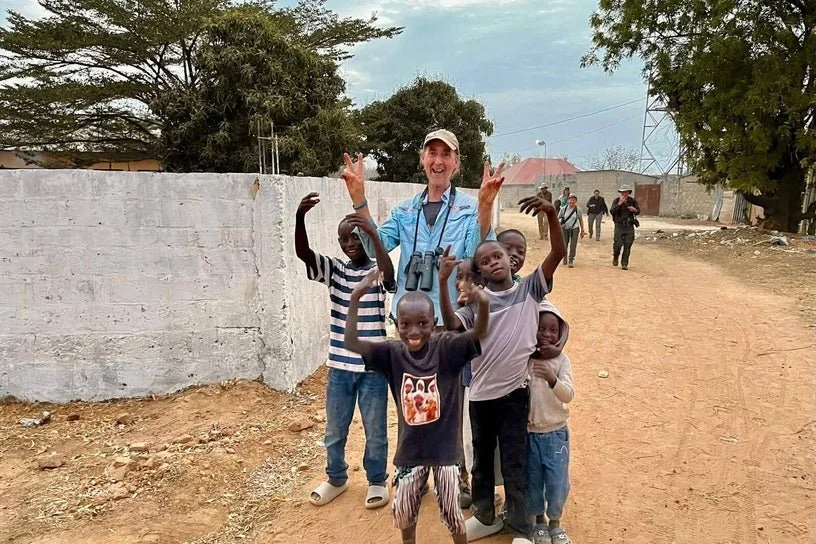
Steve grew up birding, as a young kid in the UK, and has been keen on wildlife and conservation ever since. He worked in many different wildlife positions around the world in both paid and volunteer capacity, and now splits his time between getting paid to work with endangered birds in Southern Nevada in the summer and leading birds tours for part of the winter. In between, he bases himself in eastern Washington, close to the Idaho State border. Prior to that he lived in Bend, Oregon.
Registration not necessary to attend in-person.
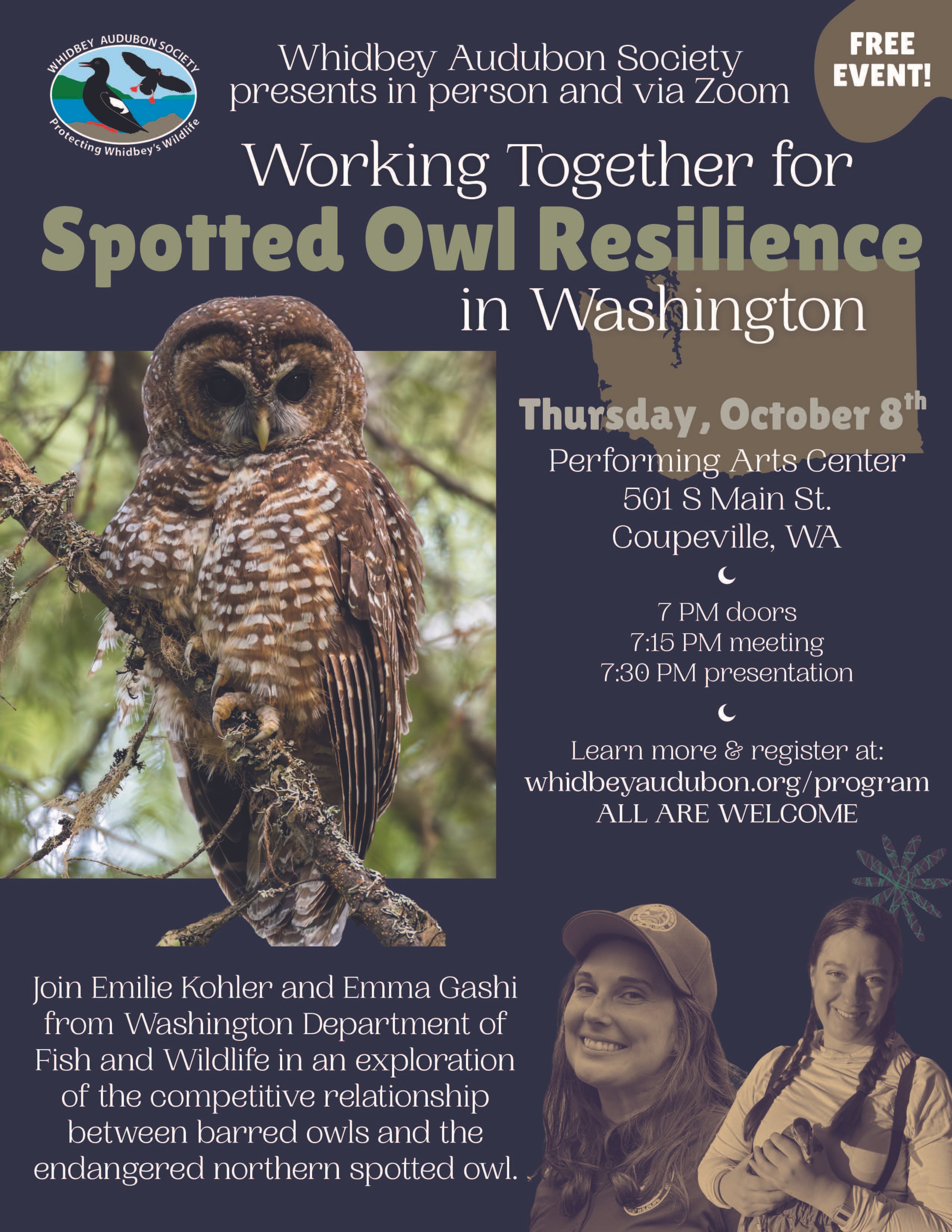
Working Together for Spotted Owl Resilience in Washington
with Emilie Kohler and Emma Gashi
Recorded October 8th, 2026
Emilie Kohler and Emma Gashi from Washington Department of Fish and Wildlife (WDFW) gave an engaging talk exploring the competitive relationship between Barred Owls and the endangered Northern Spotted Owl, including how Barred Owls alter PNW food webs and threaten other vulnerable wildlife. Emilie also discussed the current status of Spotted Owls, conservation challenges for the species in Washington and strategies the state and its partners are using to recover them.
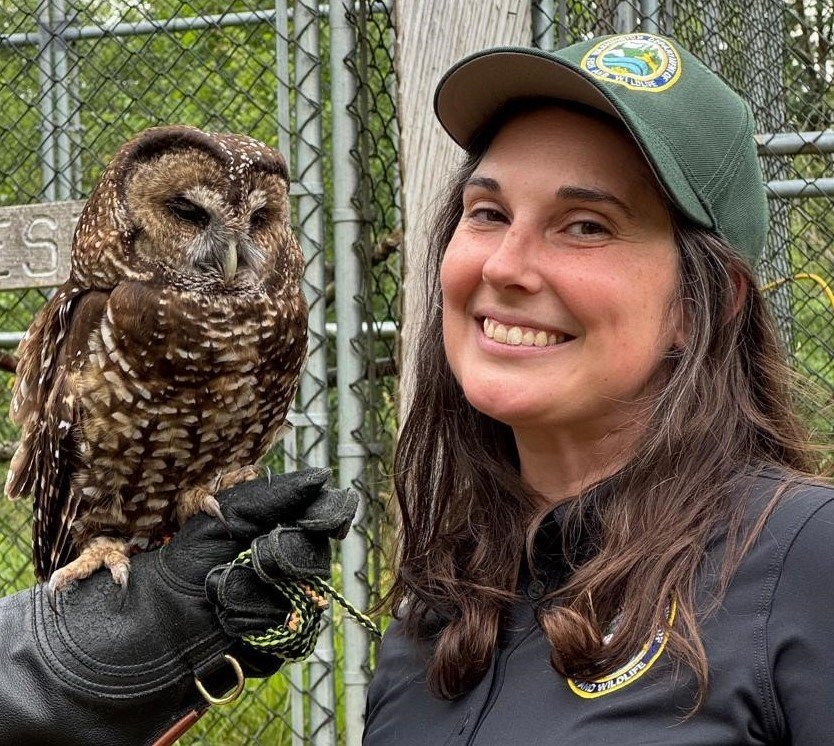
Emilie Kohler is a conservation biologist at the Washington Department of Fish and Wildlife. She received her M.S. from Florida Atlantic University and her B.S. from Shippensburg University. Her career began in the temperate rainforests of Olympic National Park, where she monitored Northern Spotted Owls and supported the reintroduction of Pacific fishers. She currently serves as a species lead in the Wildlife Diversity Division, focusing on recovery actions for species of greatest conservation need including northern spotted owls and western gray squirrels
Photo by Anour Elsa
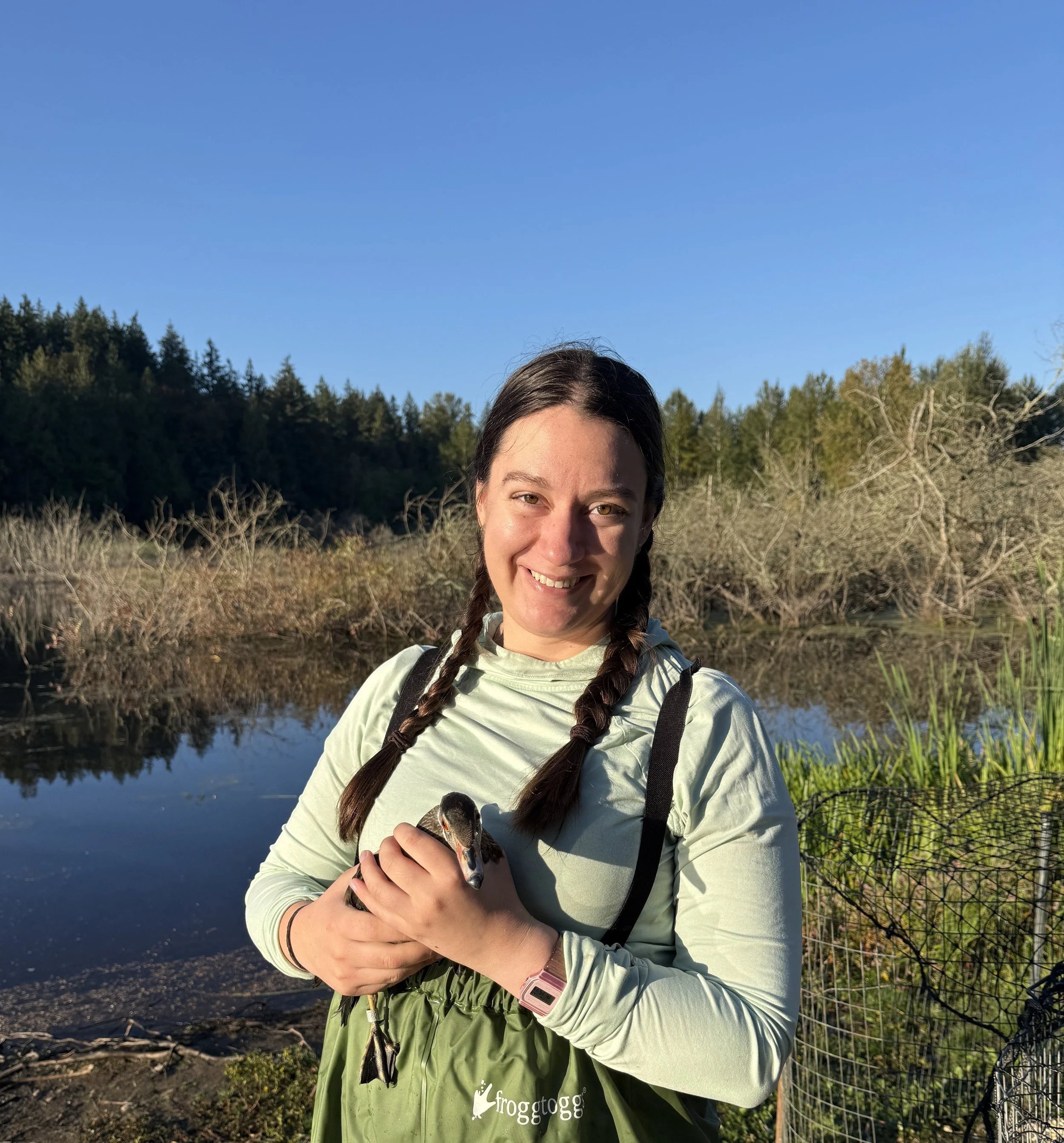
Emma Gashi is Assistant District Wildlife Biologist (AKA Field Biologist) currently working in a seasonal capacity for the Washington Department of Fish and Wildlife. She works with the District Biologist Kurt Licence, and together they cover a wide range of wildlife projects across San Juan, Island, and Snohomish Counties. Much of her work for WDFW involves monitoring Species of Greatest Conservation Need (SGCN), including the endangered island marble butterfly, bats, purple martins, peregrine falcons, sharp-tailed snakes, and, most recently, northern spotted owls. Her previous work has focused on wildlife/habitat conservation and wildlife disease monitoring.