
By Karen Posner, Shorelines Editor
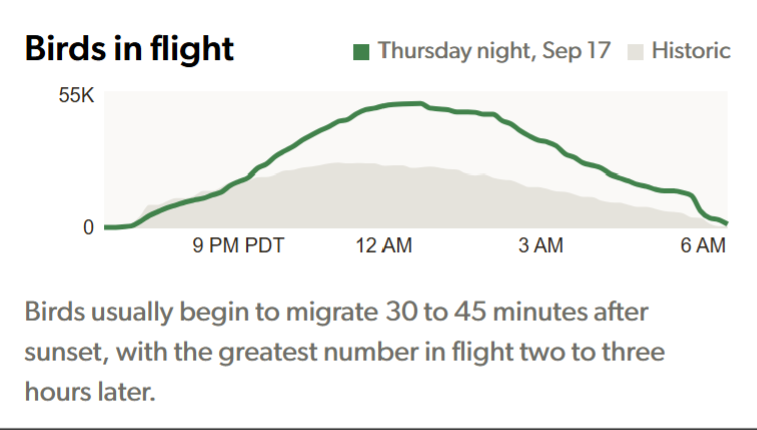
Here’s what happened during the night over Island County for September 17, 2026 (Source: Island County, Washington - Migration Dashboard - BirdCast, accessed 9/18/26, https://dashboard.birdcast.org/region/US-WA-029)
You may have noticed changes when birding recently. It’s fall migration season for birds, with peak migration happening between mid-August and mid-November. Peak migration varies by time of day and throughout the migration season. The large majority of birds migrate at night. Turning out exterior lights at night during migration helps birds find their way by reducing light pollution. It also helps birds to avoid collisions. If you are uncomfortable turning off your exterior lights for the night, consider motion detection sensors. These sensors will turn on lights when someone (or something) is within range to avoid unnecessary lighting all night long.
You can read more about migration here:
You can find migration forecasts for Washington here:
The Island County dashboard provides detailed migration information, including specific expected nocturnal migrants based on eBird observation data. For example, some expected October migrants include Fox Sparrow, Lincoln’s Sparrow, and Hermit Thrush.
You can see an Island County migration dashboard here:
Island County, Washington - Migration Dashboard - BirdCast
More local forecasts (including local areas like Freeland and Coupeville) are available here:
You can subscribe for email alerts at the above Cornell Bird Lab migration alert page.
Alerts are beneficial because they can target the highest migration activity times. Approximately 50% of migration counts occur on only 10% of migration nights. Local alerts provide an opportunity to target your actions for maximum effect to help birds on their way to the winter homes. (source: Migration Alerts – BirdCast, accessed 9/18/26).
It helps birds all year long to reduce light pollution, but this is especially important during spring and fall migration. Whidbey Audubon Society has various information articles on our website on the Stewardship page.