
By Linda Rhodes
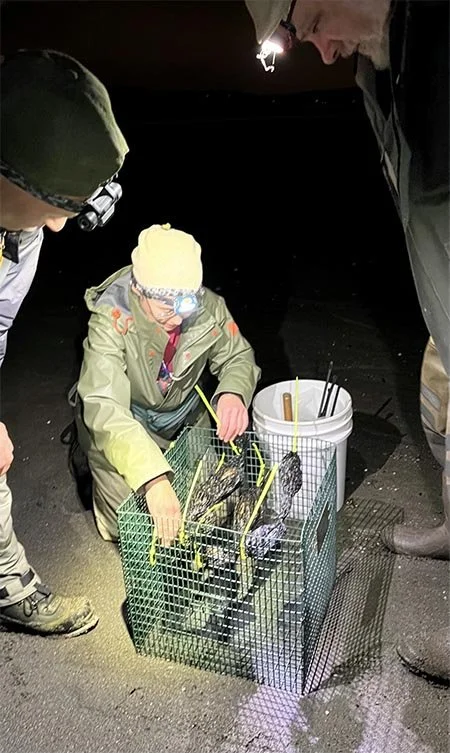
Photo by Antonia Marthaller
Figure 1: Positioning the mussel bags in the predator-proof cage at deployment, November 2025.
Mussel Watch is a biennial survey of ~85 locations throughout Puget Sound for chemical contaminants. The Washington Department of Fish & Wildlife (WDFW) established Mussel Watch in 2012 and it continues to operate the program. For the first time, Deer Lagoon became a monitoring site for the 2025﹘26 survey! This biomonitoring program will provide a peek into any contaminants, such as persistent organic pollutants or heavy metals, that might be present in Deer Lagoon waters.
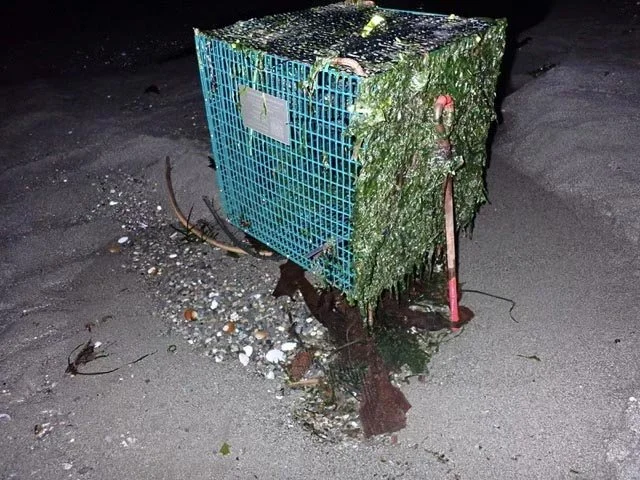
Photo by Linda Rhodes
Figure 2: Deployed predator-proof cage containing clean mussels showing tidally deposited seaweed and kelp after deployment.
Mussel Watch relies on the ability of mussels, a filter-feeding shellfish, to take up contaminants from the seawater as they process it for food. Clean mussels in a predator-proof cage are positioned at a low-tide location for three months (November–January). Then the retrieved shellfish are prepared for chemical analysis by a certified laboratory. This program supports Washington State's actions to identify and mitigate stormwater impacts on nearshore marine waters.
Deer Lagoon waters have never before been analyzed for contaminants from petroleum combustion (e.g., polycyclic aromatic hydrocarbons) or legacy contaminants (e.g., polycyclic chlorinated hydrocarbons, heavy metals). During the winter of 2025–26, Whidbey Audubon Society members deployed (Figures 1 & 2) and retrieved a mussel cage near the entrance to Deer Lagoon and helped to prepare samples for analysis at WDFW's Olympia laboratory (Figure 3). Analysis results are expected by the fall of 2026 (the analyses are time-consuming). We are hoping Deer Lagoon has chemically clean water, but we'll have to wait for the results.
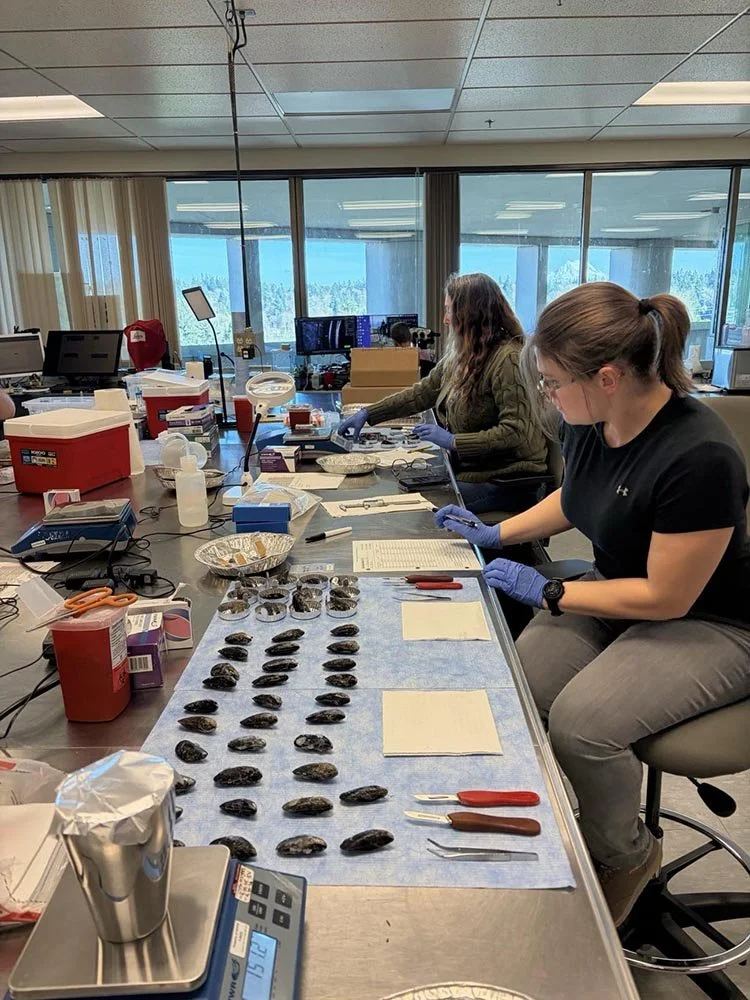
Photo by Linda Rhodes
Figure 3: Preparing retrieved mussels for chemical analysis at WDFW's marine laboratory in Olympia Washington.